Home | Articles | Analog Film
VSCO Film 02 Lightroom Presets: The Complete Alternative Guide
Richard ♦ June 12, 2026 ♦ 14 min read

VSCO Film 02 was the pack most working photographers actually used, Kodak Portra 400 NC/UC/VC, the full Fuji Superia range from 100 to 1600, and Neopan 1600 for B&W low-light work. For portrait and wedding photographers shooting people in natural light, it was the default.
It’s gone. VSCO shut down all Lightroom preset packs permanently on March 31, 2026. There’s no download link, not from VSCO, not from anywhere legitimate. The full story of why is worth a read if you want context.
This article maps every Film 02 stock to its direct replacement, with specific notes on what NC, UC, and VC actually mean, color science differences that most replacement guides skip entirely. The comparisons come from using both libraries on real client work: weddings, editorial portraits, lifestyle campaigns.
If you want everything in one place, the Classic Film Presets Collection covers 14 film stocks including Portra 160/400/800, Superia 100/400, Neopan 400, and more, XMP presets, profiles, and LUTs for $49 one-time.
Key Takeaways
- VSCO Film 02 covered Kodak Portra 400 NC/UC/VC, Fuji Superia 100 through 1600, and Fuji Neopan 1600. All of these stocks have direct equivalents available as Lightroom XMP presets.
- NC (Normal Contrast), UC (Ultra Color), and VC (Vivid Color) were variations of the same base stock, not different films. Understanding that distinction helps you pick the right replacement.
- The most-used Film 02 preset by working photographers was Portra 400 NC, neutral, flattering on skin, forgiving in mixed light.
- Fuji Pro 400H was not in Film 02 but was closely associated with the same aesthetic. It has its own preset and often makes more sense for soft, pastel-toned portrait work than the Superia range.
- XMP presets install in one step and work identically in Lightroom Classic and Lightroom desktop.
01.
What Was Actually in VSCO Film 02?
Before getting into replacements, it helps to know exactly what Film 02 contained, because photographers often remember the look without remembering which specific stock they were using.
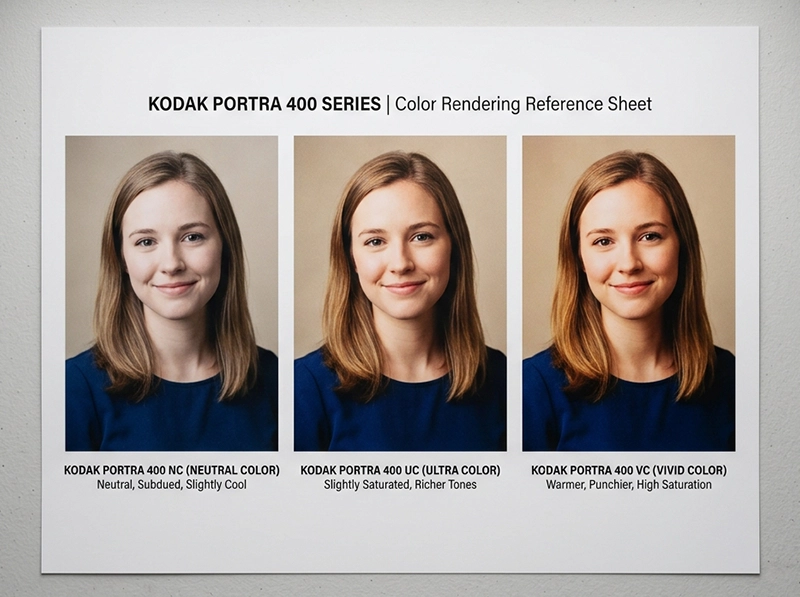
NC, UC, and VC aren’t different films — they’re the same Portra 400 base with different contrast and saturation treatments. Picking the right one depends on your light source and subject. VSCO Film 02 shipped with these stocks:
Stock in Film 02 Variation Character Kodak Portra 400 NC Normal Contrast Neutral, slightly cool, very flattering on skin Kodak Portra 400 UC Ultra Color Slightly more saturated, still neutral in tone Kodak Portra 400 VC Vivid Color Punchier contrast and saturation, warm shift Fuji Superia 100 Standard Clean, slightly cool, tight grain Fuji Superia 400 Standard More visible grain, cooler greens, everyday look Fuji Superia 800 Standard Visible grain, slight color shift, pushes contrast Fuji Superia 1600 Standard Heavy grain, shifted greens, high-speed character Fuji Neopan 1600 B&W High contrast, coarse grain, pushed look Each stock also came in +, ++, and – variations, which pushed contrast and saturation up or down in steps. The base versions above were the ones most people actually used; the ++ variants were mostly useful for specific scenes where you wanted an overdone film look.
02.
Understanding NC, UC, and VC Before You Replace Them
This is the part most replacement guides skip, and it’s the reason photographers end up with presets that feel slightly off.
NC, UC, and VC were not different film stocks. They were VSCO’s processing interpretations of the same Kodak Portra 400 negative stock, each pushing different characteristics:
NC (Normal Contrast) kept the Portra 400 base largely intact, slightly cool highlights, neutral skintones, low contrast, fine grain. This was the workhorse version. If you shot a wedding in soft open shade or overcast light, NC was probably what you used. It’s forgiving because it doesn’t push anything hard.
UC (Ultra Color) added a mild saturation bump across all channels, particularly greens and blues. Skin stayed neutral but the environment around subjects got slightly more presence. Useful for outdoor portraits where you wanted a bit more life in the background without the skintone going orange.
VC (Vivid Color) pushed contrast and saturation more aggressively, with a warm shift toward the orange-yellow range in the midtones. It reads closer to a lightly cross-processed look than a straight film print. Some photographers used this as a starting point and dialed it back; others used it as-is for more editorial, high-energy work.
When you’re choosing a replacement, you’re not just picking “Portra 400”, you’re picking which processing interpretation matched your shooting style. That distinction matters more than the brand name on the preset.
03.
The Complete Film 02 → Legendary Presets Replacement Map
Kodak Portra 400 NC → Kodak Portra 400 The straight replacement. Neutral-cool base, flattering skintones, low contrast, fine grain. If NC was your everyday portrait preset, this is your new default. The Kodak Portra Collection adds Portra 160 and 800 if you want the full ISO range in one bundle.
Kodak Portra 400 UC → Kodak Portra 400 (Balanced variation) Mild saturation lift across all channels without touching skintone warmth. Best for outdoor environmental portraits and lifestyle work where you want a bit more color presence in the frame.
Kodak Portra 400 VC → Kodak Portra 400 (Vivid variation) Orange-midtone warmth and contrast punch. Right pick for editorial work and harsh midday light. Stays truer to the actual film stock than VSCO’s VC did, you get the warmth without the occasional cross-process edge.

Portra 400 NC was the Film 02 preset most wedding photographers lived in. The same neutral, forgiving character is available in dedicated Portra 400 presets built from actual film scans. Fuji Superia 100 → Fujifilm Superia 100 Clean and controlled, fine grain, slightly cool highlights, no aggressive green push. Best for carefully lit portraits and bright-light street work where you want a Fuji character without the grain of faster stocks.
Fuji Superia 400 → Fujifilm Superia X-Tra 400 The everyday Fuji stock. Cooler shadows than Portra, a slight green push in midtones, distinctly consumer-film grain. The default for travel, street, and documentary work. For getting the most out of this stock across shooting conditions, see the Fuji presets for travel photography guide.
Fuji Superia 800 → Fujifilm Superia X-Tra 800 Larger grain, yellow-green color shift in mixed light, gritty indoor character. The step from 400 to 800 is a real grain size jump, not just a noise slider bump, and the preset reproduces that texture accurately.
Fuji Superia 1600 → Fujifilm Natura 1600 Note: Superia 1600 was never a real film stock, VSCO’s version was a simulated push. Natura 1600 is Fujifilm’s actual dedicated high-speed film, built for the same use case (available-light indoors) and a more authentic result than a push simulation.
Superia 400’s cooler shadow structure and visible grain made it the default for street and travel photographers using VSCO Film 02. The same look carries over directly into the Legendary Presets Superia X-Tra 400. Fuji Neopan 1600 (B&W) → Fujifilm Neopan 400 pushed Neopan 1600 was discontinued by Fujifilm in 2012. The pushed variation of Neopan 400 is the closest active match, same grain explosion, compressed tonal range, and high-contrast shadow structure. Kodak T-MAX 3200 is a solid alternative if you prefer slightly finer grain. The film grain guide covers how to dial in grain texture for both.
Get the Classic Films Collection
Don’t waste hours obsessing over grain sliders. Get authentic film texture across 14 classic stocks – Portra, Ektar, Fuji Pro, TRI-X and more – with presets, profiles and LUTs included.
04.
What About VSCO Film 01 Stocks?
Film 01 and Film 02 overlapped slightly, and photographers often mixed presets from both packs without thinking about which pack they came from. For completeness:
VSCO Film 01 covered Kodak Portra 160 NC/VC, Fuji Superia 100/400 (same stocks as Film 02 but with slightly different processing interpretations), Kodak Portra 800, and a few others. The Portra 160 variants were the main Film 01 additions not covered in Film 02.
- Portra 160 NC / VC → Kodak Portra 160, lower ISO, finer grain, slightly cooler base than Portra 400. The choice when you had enough light and wanted the cleanest possible negative.
- Portra 800 → Kodak Portra 800, the only Portra stock that runs warm rather than neutral. More aggressive grain, lifted shadows, the go-to for indoor reception work where you needed speed.
For the full Kodak Portra breakdown across all three ISOs, the VSCO Portra preset alternative guide covers NC/VC/UC behavior in more depth.
Neopan 1600 was VSCO Film 02’s high-speed B&W option. Neopan 400 pushed gives you the same grain explosion and compressed tonal range without needing a discontinued stock reference. 05.
Why VSCO Film 02’s Portra Presets Ran Slightly Cool for Sony Shooters
Here’s something that never made it into any VSCO Film documentation: the Portra 400 presets in Film 02 included Camera Calibration adjustments tuned to Canon and Nikon sensor profiles. Specifically, the Red Primary Hue was shifted negative and the Blue Primary Saturation was increased, adjustments that corrected for the way Canon sensors render warm tones relative to the Kodak film reference.
If you were shooting Sony (any A7 body) or a Fujifilm mirrorless camera and applying VSCO Portra 400 NC, those Camera Calibration values were working against your sensor profile. The result was a slight blue-green cast in shadows and a cooler highlight rolloff than Portra 400 actually produces. Most photographers chalked this up to “Fuji having different color science” or manually added a warm curve pull without identifying the root cause.
This matters for choosing a replacement: look for Lightroom presets that either use Adobe Standard in the Camera Calibration panel or include sensor-specific variations. Legendary’s presets use Adobe Standard as the base, which means the color rendering is consistent regardless of whether you’re shooting Canon, Sony, Nikon, or Fujifilm. You’re not inheriting calibration corrections built for a different sensor.
06.
How to Transition Your Existing Catalog
If you have photos already edited with VSCO Film 02 presets, here’s how to move forward without losing consistency.
Your old edits are safe:
- Existing Lightroom edits are stored as non-destructive slider values in the catalog, not as a link to the preset file.
- Photos you’ve already edited will continue to render correctly even if the original VSCO preset is no longer installed.
- You don’t need to re-edit anything.
For new photos:
- Pick the matching replacement from the list above and apply it as a starting point.
- Expect a minor Temp or Tint adjustment, usually no more than 200–300K in either direction, to account for your specific camera’s color rendering.
- This is a one-time calibration per stock, not a per-photo fix.
To lock consistency across a shoot:
- Apply the new preset to one photo from the set.
- Adjust it to match a reference frame from your old VSCO-edited work.
- Use Lightroom’s Sync Settings to push that edit across the rest of the shoot.
The whole process takes about five minutes per shoot and keeps your new work consistent with your existing catalog.
07.
What Replaces VSCO Film 02 Presets in Lightroom?
VSCO Film 02 was permanently discontinued on March 31, 2026. Here are the direct Lightroom preset replacements for every stock it covered:
VSCO Film 02 Preset Direct Replacement Link Kodak Portra 400 NC Kodak Portra 400 Portra 400 presets Kodak Portra 400 UC Kodak Portra 400 (Balanced) Portra 400 presets Kodak Portra 400 VC Kodak Portra 400 (Vivid) Portra 400 presets Fuji Superia 100 Fujifilm Superia 100 Superia 100 presets Fuji Superia 400 Fujifilm Superia X-Tra 400 Superia 400 presets Fuji Superia 800 Fujifilm Superia X-Tra 800 Superia 800 presets Fuji Superia 1600 Fujifilm Natura 1600 Natura 1600 presets Fuji Neopan 1600 (B&W) Fujifilm Neopan 400 pushed Neopan 400 presets All are available individually or as part of the Classic Film Presets Collection (14 stocks, $49 one-time, XMP + profiles + LUTs).
Related Reading
- VSCO Film Presets for Lightroom Are Gone, What to Use Instead, the full cluster pillar with every VSCO Film stock mapped
- VSCO Portra Presets for Lightroom: What Replaces Them, deeper look at NC/VC/UC across all three Portra ISOs
- Fuji vs. Kodak Color Science in Lightroom: Key Differences, helps you decide between Fuji and Kodak as a starting point
- Realistic Film Grain Without Losing Detail in Lightroom, grain control for high-speed B&W presets like Neopan and T-MAX 3200
08.
FAQ
Is there any way to still download VSCO Film 02 presets?
No. VSCO permanently discontinued all Film preset packs on March 31, 2026. There is no official download source. If you see third-party sites claiming to offer VSCO Film downloads, those are either pirated files or malware bait. The presets themselves are gone from the market.
I still have my original VSCO Film 02 files, can I keep using them?
Yes. If you kept your
.lrtemplateor.xmpfiles from your original purchase, they still install and run in Lightroom Classic. The format hasn’t changed. Back them up in a second location so you’re not dependent on a single drive.What’s the difference between VSCO Film 01 and Film 02?
Film 01 focused on Kodak Portra 160 NC/VC and introduced the first round of consumer Fuji stocks. Film 02 expanded the Portra 400 coverage to three variations (NC, UC, VC) and added the full Superia range from 100 to 1600. There was some overlap, both packs included Superia 100 and 400, but with slightly different processing interpretations.
Does it matter which preset pack number I was using?
Only in terms of which specific stocks were included. The film stocks themselves are what matter, NC vs. VC, Superia 100 vs. 400, not which numbered pack VSCO put them in.
Will the replacement presets work in Lightroom Classic and Lightroom (cloud)?
Yes. XMP presets work in both versions of Lightroom. Installation is slightly different, in Classic you import via the Presets panel; in the cloud version you use File > Import Profiles & Presets, but the presets themselves behave identically once installed.
How close are these replacements to the original VSCO Film 02 look?
Very close for the film stocks that exist as actual physical films (Portra 400, Superia 400, Neopan 400). The replacements are built from scanned negative reference material rather than hand-approximated recipes, so in some respects they’re more accurate to the actual film stock than VSCO Film 02 was.
The Superia 1600 replacement (Natura 1600) is the one case where the substitution is a judgment call rather than a direct match, because Superia 1600 was always a simulated push rather than a real stock.
Richard is a commercial and editorial photographer with over 15 years behind the lens. He’s shot on film and digital across three continents, and still keeps a Nikon F3 loaded with Kodak Portra on his desk. At LegendaryPresets, he leads preset development – studying actual film scans to make sure every stock behaves like the real thing.