


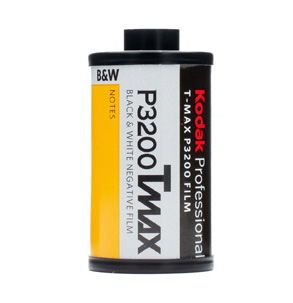
Did you know Kodak T-MAX P3200 was the first black-and-white film to offer ISO 3200 to everyday photographers? Launched in 1988, it revolutionized low-light photography, making flash-free shots in dim settings easy and affordable. Loved by photojournalists, street photographers, and concert-photographers, it quickly became a favorite for its versatility and striking aesthetic.
Kodak stocks were trusted on professional sets and personal rolls alike, browse the complete Kodak Lightroom presets collection and find the emulsion that fits the way you shoot.
01.
History of Kodak T-MAX P3200 Film
Introduction and Launch
- Introduced in 1988, T-MAX P3200 was the first widely available high-speed black-and-white film rated at ISO 3200.
- Revolutionized low-light photography, allowing photojournalists and enthusiasts to capture images in dim settings without flash.
- Prior to its release, photographers had to push-process lower ISO films, a costly and time-consuming process.
Technological Innovations
- T-Grain Technology:Features a tabular grain structure for finer grain and higher sharpness compared to cubic grain films.
- Multi-Speed Emulsion: Typically rated at ISO 800–1000 for standard processing. Designed for push-processing to ISO 3200, ideal for fast action and low-light scenarios.
Discontinuation and Market Changes
- Discontinued on October 1, 2012, due to declining demand and high production costs in the digital photography era.
- Its absence was a significant loss for photographers who relied on its unique capabilities.
Revival of T-MAX P3200
- Reintroduced on February 23, 2018, to widespread enthusiasm from the photography community.
- The updated version featured an improved emulsion and was initially available in 35mm format, with potential expansion to other formats.
Cultural Significance
- Synonymous with capturing candid moments in challenging lighting conditions.
- Beloved by street and documentary photographers for its characteristic grain and high-quality images.
- Continues to be a vital tool for those passionate about black-and-white film photography..

Kodak T-MAX 3200 Presets – Your Key to Beautiful Black & White Images.
02.
Characteristics of Kodak T-MAX P3200
Kodak T-MAX P3200 stands out for its ability to perform exceptionally well in low-light conditions. Whether you’re shooting in dim settings or experimenting with exposure, this film offers impressive versatility and distinct qualities that photographers love.
Key Features
Dynamic Range and Contrast:
- Captures high-contrast scenes with ease, thanks to a dynamic range of approximately 10 stops.
- Maintains details in both shadows and highlights when exposed correctly, especially at EI 3200 or 6400.
- Outperforms 400-speed films pushed by three stops [1].
Grain Structure:
- Noticeable but “soft” grain, making it less harsh compared to other high-speed films [2].
- Grain becomes more prominent in larger prints but is subtle on smaller formats or mobile screens [1].
Latitude and Processing:
- Offers excellent flexibility, allowing exposure adjustments without significant loss in image quality.
- Can be pushed by one or two stops for shooting in darker conditions.
- Requires careful development to avoid harsh grain and subpar results [3].
Subjective Image Quality:
- Image aesthetics, such as tonality and grain, are often a matter of personal taste.
- Development and scanning methods can greatly influence the final image, offering room for creative experimentation [7].
At a Glance: T-MAX P3200 Performance
| Feature | Details |
| Dynamic Range | 10 stops – great for shadow and highlight detail. |
| Grain Quality | “Soft” grain, less harsh than similar high-speed films. |
| Pushability | Can be pushed 1–2 stops, handling low light effectively. |
| Format Availability | 35mm only – ideal for street, portrait, and low-light photography. |
03.
Mastering Low-Light Photography with Kodak T-MAX P3200
Kodak T-MAX P3200 is your go-to film for low-light and fast-action photography. Whether you’re shooting a dimly lit concert, capturing street scenes at night, or snapping candid portraits, this high-sensitivity film offers outstanding performance.
Why Choose T-MAX P3200?
- High ISO Capability: Push-process the film to an impressive ISO 25,000 for extreme low-light conditions. Expect noticeable grain at higher ISO settings, but many photographers embrace this as part of the film’s aesthetic [5].
- Low-Light Mastery: Delivers sharp, steady shots without the need for flash, perfect for ‘available light’ photography. Natural scenes are captured beautifully without artificial lighting interference.
- Recommended Developer: Pair with Kodak XTOL for optimal results, especially when pushing the film’s limits. XTOL enhances control over grain and contrast during development [5].
Format and Applications
Available only in 35mm, making it ideal for:
- Street Photography: Capture dynamic, candid scenes.
- Documentary Photography: Record authentic, raw moments.
- Portraits: Add a dramatic, high-contrast touch.
Cost vs. Performance:: While not the cheapest option, its exceptional performance in difficult lighting makes it worth the investment [2].
Quick Snapshot of T-MAX P3200
| Feature | Details |
| ISO Range | Pushable to 25,000 with noticeable but appealing grain |
| Best Use Cases | Low-light, fast-action, and natural light photography. |
| Format | 35mm only – street, portrait, and documentary photographers’ favorite. |
| Developer Choice | Kodak XTOL for enhanced control and optimal results. |
04.
How to Develop Kodak T-MAX P3200 Film?
Getting the best out of Kodak T-MAX P3200 requires careful attention to how you develop it. Here’s how you can fine-tune your process to achieve stunning results.
Development Time and Chemicals
- Flexibility in Timing: Published development times are a good starting point, but they’re not set in stone. Experiment with shorter times to reduce contrast and soften grain. Over-development or excessive agitation can lead to overly dark or light results [9].
- Recommended Developers: XTOL, D-76, and T-MAX Developer are top choices for maximizing film performance [10]. Push processing to exposure indices (EIs) as high as 25,000 for extreme low-light conditions [12].
Controlling Variables
To ensure consistent results:
- Standardize factors like developer type and film speed rating.
- Experiment with variables one at a time, such as shooting several rolls at EI1000 with the same chemicals to understand how grain and contrast are affected [4].
Tips for Better Results
- Consult Labs: Work with a professional lab to understand their methods and chemicals for valuable insights [10].
- Embrace Experimentation: Small adjustments in development can make a big difference in image quality. Trial and error helps you refine your approach based on the film’s unique characteristics [12].
Quick Reference Table: Processing Tips
| Aspect | Recommendation |
| Development Time | Start with published times; adjust for grain and contrast. |
| Developers to Use | XTOL, D-76, T-MAX Developer. |
| Push Capability | Up to EI25,000 for dramatic low-light images. |
| Experimentation | Standardize one factor, adjust others gradually for consistent results. |
With a bit of patience and creativity, you can turn T-MAX P3200 into the perfect film for your artistic vision.
05.
How is Kodak T-MAX 3200 Received by Photographers?
Kodak T-MAX 3200 has sparked mixed feelings among photographers, especially those working in concert and street photography. Here’s what users love—and what gives them pause:
What Photographers Love
- Low-Light Performance: Excels in dim conditions, delivering dramatic contrasts and unique textures. Perfect for capturing live performances and candid street scenes with a gritty, natural feel [13].
- Minimal Editing Appeal: Produces raw, candid images that need little post-processing, making it a favorite for photographers who value authenticity [13].
Points of Criticism
- Price Tag: Scored a 4 out of 10 for cost, leading some to reserve it for specific projects rather than general use.
- Mixed Technical Ratings: Shadow and highlight recovery earned a 6 out of 10, indicating room for improvement in extreme lighting conditions [13].
Overall Impression
- User Scores: Most photographers rate it around 7 out of 10, appreciating its strengths while acknowledging its niche appeal.
- Best Fit: Ideal for those who enjoy high-contrast, dramatic images and can work within its limitations in other contexts.
06.
Iconic Shots: Celebrated Work with Kodak T-MAX 3200
Kodak T-MAX 3200 has proven itself as a versatile, high-sensitivity film, shining in various low-light photography genres. Here’s why it has become a go-to choice for many photographers:
Key Highlights
- Street and Concert Photography: This film thrives in dynamic, low-light environments, delivering stunning results in street and live performance photography.
- Optimal ISO Usage: At its native ISO 800, T-MAX 3200 produces excellent sharpness and highlight detail, especially with slight underexposure (by one-third to half a stop). Even when pushed to EI 6400 or higher, it remains usable, though shadow detail becomes thinner at extreme settings like EI 12800 [16].
Praised Features
- Grain Structure and Image Quality: Renowned for its grain structure, photographers have achieved detailed, clear images even in tough lighting conditions by using careful development techniques.
- Adaptability: Its ability to adjust to varying lighting and development conditions has made it a preferred tool for both professionals and hobbyists.
Real-World Success
One photographer shared their satisfaction shooting at ISO 800 and using specific development methods to minimize grain. This approach resulted in sharp, beautifully detailed photographs, even in challenging environments [16].
Why It Matters
The versatility and reliability of Kodak T-MAX 3200 have solidified its role in celebrated photographic projects, earning its place in the toolkit of artists seeking dramatic, impactful imagery.
07.
T-MAX 3200 vs. Other High-Speed Black-and-White Films
If you’re considering Kodak T-MAX 3200, it’s helpful to know how it compares to other popular high-speed films like Ilford Delta 3200 and Fuji Neopan 1600. Here’s a quick breakdown of their strengths and differences:
1. Ilford Delta 3200
| Feature | Kodak T-MAX 3200 | Ilford Delta 3200 |
| Native ISO | 800 | 1000 |
| Grain Structure | Noticeable but “soft” | More pronounced but even. |
| Dynamic Range | Excellent shadow and highlight detail | Slightly less shadow detail than T-MAX. |
| Best Applications | Concerts, street photography, portraits. | Street photography, low-light portraits. |
| Development Flexibility | Performs well with XTOL and D-76 | Works great with Ilford ID-11. |
Key Takeaway: Ilford Delta 3200 has a slightly higher native ISO and more pronounced grain, which can give images a bolder, rawer aesthetic. T-MAX 3200 excels in shadow detail and smoother tones.
2. Fuji Neopan 1600
| Feature | Kodak T-MAX 3200 | Fuji Neopan 1600 |
| Native ISO | 800 | 1600 |
| Grain Structure | Noticeable but “soft”. | Fine grain for its speed. |
| Dynamic Range | Broad range, handles highlights well. | Narrower range, better for mid-tones. |
| Availability | Widely available. | Discontinued but sometimes resurfaces. |
| Development Flexibility | Great for push processing. | Less pushable due to narrower latitude. |
Key Takeaway: Fuji Neopan 1600 is harder to find since it’s discontinued, but when available, it’s known for fine grain and smooth mid-tones. T-MAX 3200 offers more flexibility, especially for pushing to extreme ISOs.
Check out the Fuji Neopan 400 Presets for Lightroom here.
Summary of Key Differences
| Film | Best For | Notable Features |
| Kodak T-MAX 3200 | Low light, dynamic range. | Smooth grain, great shadow detail, versatile. |
| Ilford Delta 3200 | Raw, bold aesthetics. | Slightly higher native ISO, even grain. |
| Fuji Neopan 1600 | Mid-tone-rich portraits. | Fine grain, but limited availability. |
T-MAX 3200 is the most versatile option, making it a reliable choice for photographers who want flexibility in development and a balance between grain and detail.
08.
Reviews of the Kodak T-MAX P3200 Film
1. The Magic of TMZ – Kodak T-MAX P3200
This review praises the film for its deep blacks, punchy highlights, and stunning tonal range. The reviewer notes that while it is rated as ISO 3200, it behaves more like an ISO 800 film when developed with standard black and white developers. The sweet spot for exposure is suggested to be at EI 1600, which yields sharp images with beautiful grain. The versatility of the film allows it to be used in various lighting conditions, making it highly recommended for both day and night photography. (Source)
2. Kodak T-MAX P3200 Black-and-White Film Review
This review describes T-MAX P3200 as a multi-speed film that excels in low-light conditions, making it ideal for fast action and nighttime photography. The reviewer emphasizes that while the grain is prominent, it can be managed effectively with proper development techniques. The film’s performance at box speed (EI 3200) is noted to be particularly good for high-contrast scenes, and the ease of scanning is also highlighted as a positive aspect. (Source)
3. Film Review Blog No. 27 – Kodak T-MAX P3200
The reviewer shares a balanced perspective on the film, noting its reasonable grain and sharpness even when pulled or pushed during development. They found that shooting at EI 1600 produced pleasing results, especially in varied lighting conditions. The review acknowledges the film’s limitations in larger formats but appreciates its overall performance in 35mm, particularly when developed with specific chemicals like Ilford Microphen. (Source)
4. Film Emulsion Review: Kodak T-MAX P3200
This review discusses how T-MAX P3200 is not truly an ISO 3200 film but rather designed to be pushed to that speed. It highlights the film’s ability to produce detailed images with less grain compared to other high-speed films like Delta 3200. The reviewer recommends using high-quality lenses to maximize sharpness and detail in images taken at higher ISOs. They conclude that T-MAX P3200 is an excellent choice for photographers needing detail in low-light situations. (Source)
5. Kodak TMAX P3200 Review — Jon Mullin Photography
This review focuses on the film’s suitability for street photography and concerts due to its high speed and ability to capture moments in low light. While acknowledging the graininess typical of high-speed films, the reviewer argues that this grain adds character rather than detracts from image quality. They also mention some challenges with curled negatives after development but overall regard the film as a solid choice for dynamic environments. (Source)
09.
Availability and Alternatives for Kodak T-MAX P3200
If you’re looking to get your hands on Kodak T-MAX P3200 or seeking alternatives, here’s what you need to know:
Where to Purchase Kodak T-MAX P3200
- Online Retailers: Major photography retailers like B&H Photo Video offer Kodak T-MAX P3200 in 35mm format. B&H Photo Video
- Amazon: You can find T-MAX P3200 on Amazon, though availability may vary. Amazon
- Local Camera Stores: Check with local photography shops; they often stock popular films or can order them for you.
Alternatives to Kodak T-MAX P3200
If T-MAX P3200 is unavailable or doesn’t fit your budget, consider these alternatives:
- Ilford Delta 3200: A high-speed black-and-white film with a nominal sensitivity around ISO 1000-1200, but can be pushed to 3200 or higher during processing. It’s known for its fine grain and high contrast, making it suitable for low-light conditions. 35 Milly
- Pushing ISO 400 Films: Films like Kodak Tri-X 400 or Ilford HP5+ 400 can be pushed to higher ISOs (e.g., 1600 or 3200) during development. This technique increases sensitivity but also enhances grain and contrast. Learn Film
- Digital Alternatives: If film options are limited, digital cameras with high ISO capabilities can be a practical alternative for low-light photography.
When choosing an alternative, consider the specific look and grain structure you desire, as each film has its unique characteristics.
Discover related Analog Film Reviews
Kodak T-MAX 400 Review
Agfa Scala 200X Review
Fujifilm Neopan 400 Review
Fujifilm Pro 400H Review
Fujifilm Instax Review
Fujifilm Neopan Acros 100
Kodak T-MAX 100 Review
Fuji Lightroom Presets for Film Enthusiast:
Agfa Scala 200X Presets
Essential Black & White Portrait Presets
Fujifilm Neopan Acros 100 Presets
Kodak T-MAX 100 Presets
Kodak T-MAX 400 Presets
Kodak TRI-X 400 Presets