


Home | Articles | Adobe Lightroom
Best Lightroom Presets for Wedding Photography: A Scenario-by-Scenario Guide
Richard ♦ updated July 5, 2026 ♦ 14 min read

Wedding photography is the hardest editing scenario for presets. In a single day you shoot getting-ready in window light, an outdoor ceremony in direct sun, couple portraits in golden hour, and a reception under tungsten and LED. Every scene has a different light. Every image needs to look like it belongs to the same gallery.
Most preset packs fail at weddings because they are calibrated for one type of light. A warm film preset that looks perfect in golden hour portraits looks orange and flat under reception lighting. A cool editorial preset that works beautifully in window light looks grey and lifeless in direct sun.
This guide covers which film presets to use at each stage of a wedding day, how to switch between them as the light changes, and how to build a consistent gallery from images shot across five completely different lighting environments.
Key Takeaways
- Wedding photography needs at least two presets: one for warm outdoor light, one for mixed indoor/artificial light.
- Kodak Portra 400 is the standard for outdoor ceremonies and golden hour portraits: warm, forgiving, strong highlight rolloff.
- Kodak Portra 800 is built for receptions and indoor ceremonies with mixed artificial light.
- Fujifilm Pro 160NS wins in soft, diffused ceremony light: lower contrast, more flexible in post than Portra.
- Gallery consistency beats any single perfect shot. Pick presets with matching tonal character so switching between them stays invisible.
- Film presets keep their color science stable as light changes, a consistency edge generic presets don’t have.
01.
Why Wedding Photography Needs a System, Not a Single Preset
A wedding gallery typically contains 400 to 600 final images shot across six to ten hours in five or more lighting environments. The challenge is not making individual images look good, it is making the entire gallery feel cohesive when every scene looks completely different.
The problem with a single preset:
- One look calibrated for golden hour looks orange and flat under tungsten reception light
- One look calibrated for indoor light looks grey and lifeless in direct outdoor sun
- Constant individual corrections per image eat up every minute the preset was supposed to save
Why film stock presets solve this better than generic presets:
- Each stock was calibrated for specific lighting conditions
- Switching between stocks as light changes produces consistency because the underlying color philosophy is the same across the Kodak or Fuji range
- Portra 400 outdoors and Portra 800 indoors look different in warmth, grain, and contrast, but they belong to the same color family and hold together in a gallery
The two-preset minimum for a wedding day:
- One warm outdoor stock for ceremony and golden hour portraits, Kodak Portra 400
- One mixed-light indoor stock for indoor ceremony and reception, Kodak Portra 800
A gallery shot on Portra 400 for outdoor work and Portra 800 for indoor work holds together better than a gallery where one preset was forced to cover both conditions.
02.
The Wedding Day by Lighting Scenario
Getting Ready: Window Light and Indoor Ambient
Getting-ready shots are almost always shot in available light, hotel rooms, bridal suites, homes. The light is directional window light mixed with indoor ambient. Skin tones and fabric detail are the priorities.
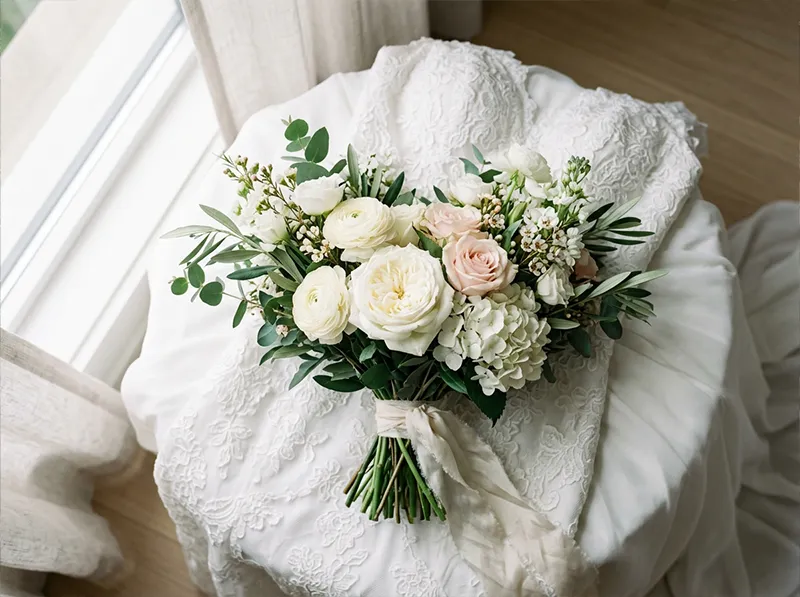
Best choice: Fujifilm Pro 160C
Pro 160C handles the mixed color temperature of indoor window light better than most other stocks. Its slight warmth compensates for cool window light without going orange under the warmer ambient sources in the room. Clean skin rendering with good shadow detail, exactly what getting-ready shots need.
Second choice: Kodak Portra 160
For bridal detail shots, dress, shoes, rings, flowers, Portra 160’s finer grain and slightly cooler, cleaner tone produces more refined detail work than 400. Use 160 for detail shots and Pro 160C for skin.
What to avoid: Warm, high-contrast presets that look great in golden hour will push skin orange under indoor light and lose dress detail in the highlights.
Outdoor Ceremony: Direct Sun and Variable Light
Outdoor ceremonies cover the widest range of light conditions in a single shooting block, full direct sun, open shade, dappled light through trees. The challenge is a preset that holds up across all of them without requiring constant white balance correction.
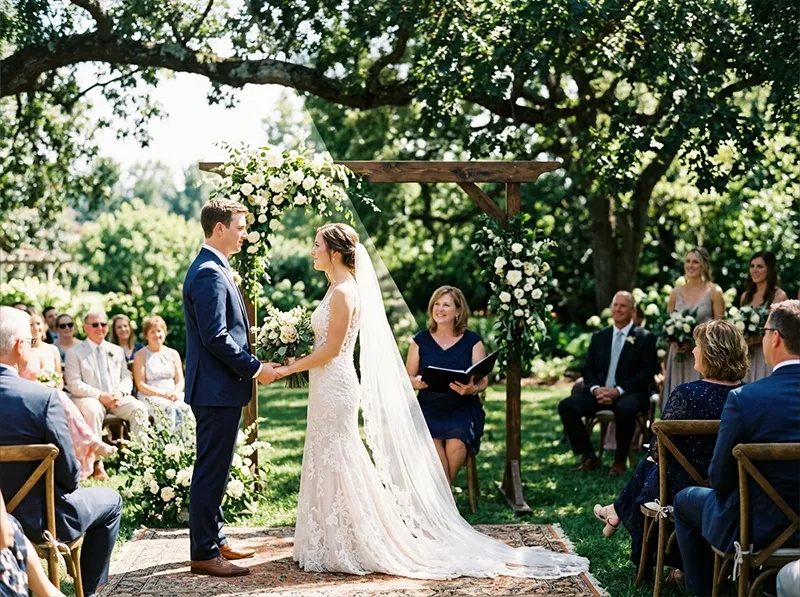
Best choice: Kodak Portra 400
Portra 400’s calibration handles variable natural light better than any other stock in the range. Its highlight rolloff protects dress detail in direct sun. Its lifted shadows retain face detail when subjects are backlit. The warmth works in most natural light conditions without pushing skin orange.
Adjustment in direct sun: Drop Temperature 100 to 150K to prevent warm push in strong midday sun.
Second choice: Fujifilm Pro 160NS
For documentary-style ceremony coverage in soft or overcast light, Pro 160NS is the better choice. Its low-contrast, slightly desaturated character produces clean, refined ceremony coverage that feels reportage rather than editorial. Works particularly well when shooting in shade or under a canopy where Portra’s warmth can look flat.
Indoor Ceremony: Church, Hall, and Low Light
Indoor ceremonies are the most difficult lighting environment in wedding photography. Mixed tungsten chandeliers, candles, daylight from windows, and flash or ambient-only shooting combine unpredictably. Any warm preset will push further orange under tungsten.
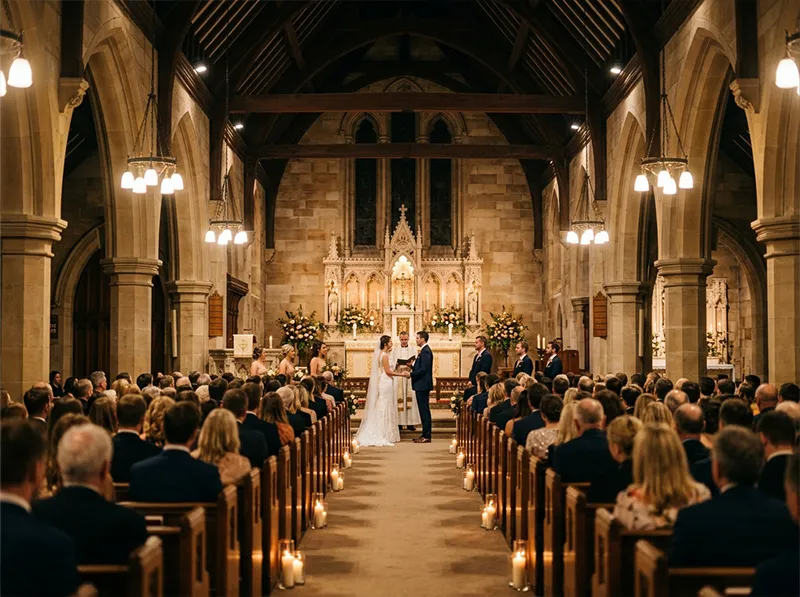
Best choice: Kodak Portra 800
Portra 800 was specifically designed for this environment. It was the professional film of choice for indoor event photography for exactly this reason, it was calibrated to handle the mixed color temperatures of venues without oversaturating the warm sources or going grey in the shadows. The visible grain at 800 ISO adds presence rather than digital noise character.
Adjustment under strong tungsten: Pull Temperature down 200 to 300K. Portra 800’s warmth is calibrated for mixed light, pure tungsten requires correction.
Second choice: Fujifilm Natura 1600
Natura 1600 was designed specifically for available light photography, no flash, indoor ambient only. Its high-ISO grain character reads more neutral than Portra 800 in artificial light, which works well in very warm venues where Portra 800 still runs slightly warm even after Temperature correction.
Golden Hour Portraits: The Best Light of the Day
Golden hour portraits are the easiest editing scenario in a wedding day, warm, directional light that works with every portrait preset. The challenge is not getting a good result, it is getting a result that matches the rest of the gallery.
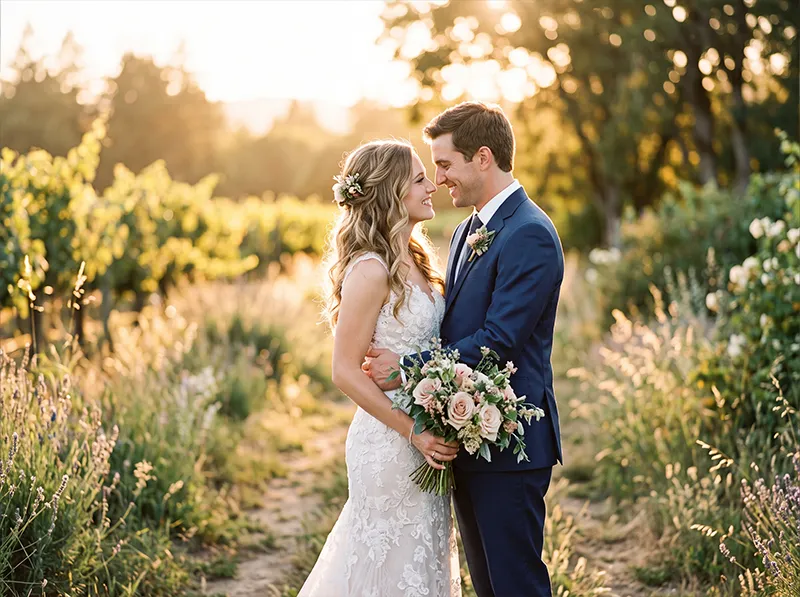
Best choice: Kodak Portra 400
In golden light, Portra 400 produces the closest thing to a perfect portrait preset. Warm midtones, creamy highlight rolloff, lifted shadows with detail. The only adjustment most golden hour portraits need is a minor exposure correction.
For a slightly moodier, more editorial feel: Kodak Portra 800 in golden light gives more contrast and grain than 400, works well if the couple’s portraits are meant to have a strong editorial character distinct from the warmer ceremony work.
Gallery consistency note: If you used Portra 400 throughout the ceremony, continue with 400 for golden hour portraits. Switching to a different preset for the golden hour portraits creates a visible break in the gallery’s tonal character.
Reception: Mixed Artificial Light and Low Light
Reception editing is where most wedding galleries lose consistency. Tungsten lighting, LED dance floor lighting, candles, and ambient window light at dusk all combine in a single room over three hours. No single preset handles all of it without adjustment.
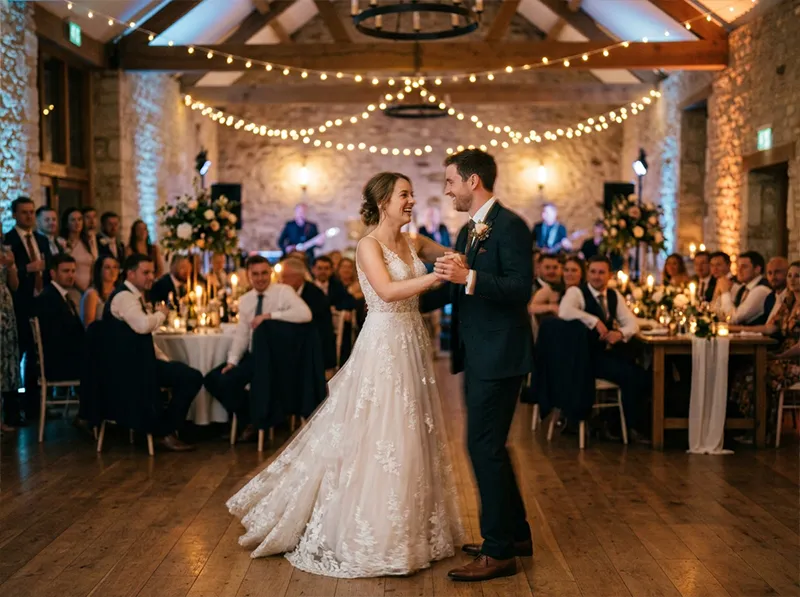
Best choice: Kodak Portra 800
The standard for reception work for all the same reasons it works in indoor ceremonies. Calibrated for mixed light, grain that adds character rather than noise at high ISO, skin tones that hold up under artificial sources. Apply it across the entire reception block and adjust Temperature per lighting condition rather than switching presets mid-reception.
Temperature guide for reception lighting:
- Mixed ambient and window light at dusk: Portra 800 base, no Temperature adjustment
- Tungsten chandeliers dominant: pull Temperature down 200 to 300K
- LED dance floor lighting: adjust Tint slightly green if lighting is strongly colored
- Candle-lit tables: Portra 800 base, no correction, the warmth is correct
Second choice: Fujifilm Natura 1600
For very dark venues or candlelight-only receptions, Natura 1600’s high-ISO character produces a more neutral, documentary-style result than Portra 800. The grain reads finer and the color is more neutral, closer to what a photojournalist would produce at a dark reception.
03.
Best Lightroom Presets for Wedding Photography
Most wedding photographers need two film presets: Kodak Portra 400 for outdoor ceremonies and golden hour portraits, and Kodak Portra 800 for receptions and indoor light. Both share the same warm, forgiving color science, so switching between them mid-gallery stays invisible instead of creating a visible style break.
04.
Wedding Day Preset Workflow: Quick Reference
| Scenario | First Choice | Second Choice | Primary Adjustment |
| Getting ready, window light | Fujifilm Pro 160C | Kodak Portra 160 | Temp +/- 100K to match ambient |
| Outdoor ceremony, sun | Kodak Portra 400 | Fujifilm Pro 160NS | Temp -100K in direct midday sun |
| Outdoor ceremony, shade | Fujifilm Pro 160NS | Kodak Portra 400 | Minimal, preset handles it |
| Indoor ceremony | Kodak Portra 800 | Fujifilm Natura 1600 | Temp -200K under strong tungsten |
| Golden hour portraits | Kodak Portra 400 | Kodak Portra 800 | Exposure only, preset handles color |
| Reception, mixed light | Kodak Portra 800 | Fujifilm Natura 1600 | Temp per light source |
| First dance, dark venue | Fujifilm Natura 1600 | Kodak Portra 800 | Exposure, check grain at 100% |
05.
Building Gallery Consistency
Consistency is the professional standard in wedding photography. A couple looking at their gallery months later should not be able to see the moment you switched presets.
Three practices that maintain consistency:
Use stocks from the same brand family for the day. Kodak Portra 400 for outdoor work and Kodak Portra 800 for indoor work share the same tonal philosophy. Mixing Kodak outdoor with Fuji indoor creates a more visible shift in the gallery’s character.
Apply a single preset per lighting block, then correct exposure. Do not switch presets image by image within a reception. Apply Portra 800 to the entire reception block. Then go through image by image adjusting only exposure and, where necessary, Temperature. This takes minutes rather than hours and produces more consistent results than individual preset choices.
Reserve the second preset for genuinely different lighting. If the ceremony is entirely outdoors and Portra 400 handles it, do not switch to Pro 160NS for a few shaded images. Correct those images individually and maintain the Portra 400 throughout. Switch presets only when the lighting environment genuinely changes, ceremony to reception, outdoor to indoor.
06.
Black and White at Weddings
Every wedding gallery needs B&W images. Ceremony candids, details, emotional moments, the B&W conversion elevates images that have strong emotional content but challenging color.
For wedding B&W: Kodak TRI-X 400 produces the right weight for wedding B&W, strong contrast, visible grain, the tonal range of documentary photography. Avoid soft, low-contrast B&W presets for wedding work, they look flat rather than timeless.
For a cleaner, finer-grain B&W that suits formal portraits and bridal detail work: Kodak T-MAX 400 gives the structure of TRI-X with less grain, closer to a fashion or editorial B&W quality.
07.
FAQ
How many presets do wedding photographers actually need?
Two to three covers a full wedding day. Portra 400 for outdoor work, Portra 800 for indoor and low light, and optionally Pro 160NS for soft overcast outdoor coverage. Most working wedding photographers settle on two stocks that they know well rather than switching between five. Familiarity with a small set produces better and faster results than having every option available.
Should I use the same preset for engagement sessions and wedding day?
Yes, where possible. If your engagement sessions are predominantly outdoor natural light, using the same preset as your outdoor ceremony work keeps the couple’s gallery feeling consistent across both shoots. Switch only when the engagement session is shot in substantially different conditions from the wedding day.
Do these film presets require a specific shooting style?
Portra stocks are forgiving across a wide exposure range, they handle up to one stop of over or underexposure well. Fuji stocks are slightly more precise. For wedding photography generally: expose to protect highlights, particularly on white dresses, and let the preset’s lifted shadows handle the shadow detail. Do not correct aggressively in camera at the expense of highlights.
Which preset is best for outdoor ceremonies in full sun at midday?
Kodak Portra 400 with Temperature pulled down 150 to 200K. Full midday sun is the most demanding condition for any warm portrait preset. The Temperature correction prevents the warmth from pushing skin orange, and Portra’s highlight rolloff protects dress and sky detail better than most alternatives.
Can I use the same preset for editorial-style wedding photography?
Fujifilm Pro 160NS and Kodak Portra 160 both produce cleaner, more restrained results that suit editorial wedding photography. For a warmer editorial style, Portra 800 in good light gives the contrast and grain of editorial film photography without going too dark.
Browse the complete Kodak Lightroom presets collection and the full Fuji Lightroom presets range. For the full guide to every photography genre, see our best Lightroom presets for photographers overview. For portrait-specific guidance see our best Lightroom presets for portraits guide.
Related Articles
- The Best Lightroom Presets for Photographers in 2026
- Best Lightroom Presets for Portrait Photography
- Kodak Portra 160 vs 400 vs 800: Which Preset Do You Actually Need?
- How to Use Lightroom Presets: The Complete Workflow Guide
- Best Black and White Lightroom Presets
Richard is a commercial and editorial photographer with over 15 years behind the lens. He’s shot on film and digital across three continents, and still keeps a Nikon F3 loaded with Kodak Portra on his desk. At LegendaryPresets, he leads preset development – studying actual film scans to make sure every stock behaves like the real thing.