


Home | Articles | Analog Film
Agfa Scala 200X: How to Get the World’s Best B&W Look
October 22, 2024
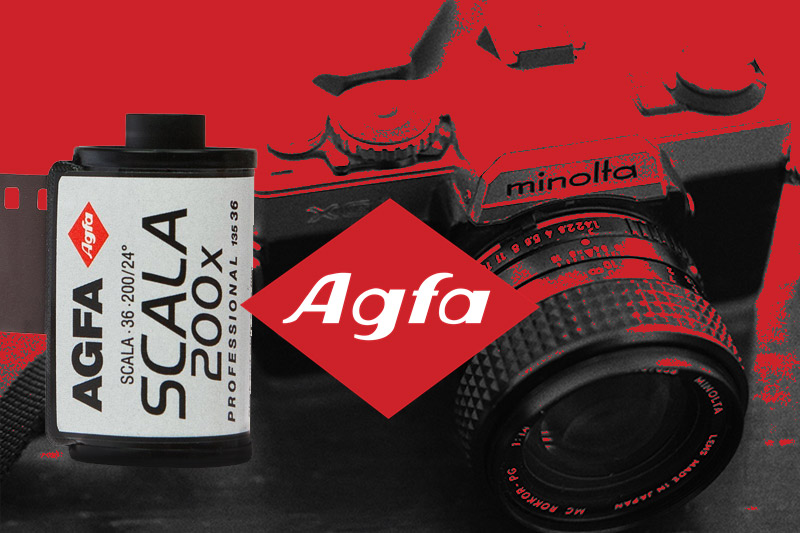
Did you know that Agfa Scala 200X was once the only dedicated black-and-white slide film on the market? Despite being discontinued in the early 2000s, it’s still celebrated for its deep blacks, bright highlights, and sharp details that rival even medium format films. This article delves into why Agfa Scala 200X left such a lasting impact on photographers and explores its technical features, challenges, and enduring legacy.
01.
History Agfa Scala 200X Film
The Agfa Scala 200X black-and-white film has an engaging history, shaped by advances in photographic technology:
- Introduced in the Early 1960s: Scala was among the first films to combine the qualities of black-and-white and color negative films, giving photographers a wider tonal range [1].
- Developed by Agfa: Founded in Berlin in 1867, Agfa (later Agfa-Gevaert) introduced this film using advanced emulsion technology, which provided a wide exposure latitude and exceptional sharpness.
- Similar Production Process to Color Films: The film’s production closely resembled techniques used for color films, resulting in its distinctive look and aesthetic appeal.
- Discontinued in the Early 2000s: Due to the decline of analog photography, Agfa ceased production of Scala, leaving a gap in the market for high-quality black-and-white reversal films.
- Legacy and Influence: Despite its discontinuation, Scala has left a lasting mark on the film industry, influencing other black-and-white films. Many manufacturers have attempted to recreate its qualities in modern emulsions [2].
- Reflecting Industry Trends: Scala’s history aligns with broader industry trends, showcasing how consumer preferences and technological advancements can impact product lines.
Today, Agfa Scala 200X remains a favorite among film enthusiasts who appreciate its unique characteristics. Even newer brands have stepped in to fill the void, ensuring Scala’s influence endures in modern photography.

02.
Technical Specifications
Film Characteristics
- Variable Sensitivity: Agfa Scala 200X offers a flexible ISO range from 100 to 800, making it versatile for different lighting situations. The recommended rating is ISO 100 for negatives and ISO 160 for reversal processing.
- Dual Development Options: You can process Scala as either a negative or transparency film, giving photographers flexibility in their creative choices.
- Fine Grain and High Resolution: Scala’s fine grain and impressive resolution have made it popular among those who prioritize image quality.
Development Process
Processing as Negatives:
- Recommended Developers: Ilford ID-11 or Kodak D-76, diluted 1+1, for about 9 minutes at 20°C.
- Alternative: R09 Studio (Agfa Studional), diluted 1+31, for 15 minutes at 20°C.
Processing as Reversal Film:
- Requires specific chemistry and specialized techniques, available only at a few labs.
Color Sensitivity and Grain
- Spectral Sensitivity Curve: Scala responds uniquely to green light around 550 nm, making it different from other popular black-and-white films like Ilford HP5 Plus.
- Grain Structure: Known for its fine grain, even at ISO 100, the film retains sharpness and detail, resulting in a broad tonal range. A consistent ISO 100 rating is recommended to avoid losing shadow detail during processing [3].
Physical Properties
- Clear Triacetate Base: Scala has a clear base with an anti-halation layer, removed during development, making it easy to scan.
- Film Thickness: At 125 µm, similar to Ilford FP4 Plus, Scala’s negatives have standard curl levels and include faint frame numbers for easy archiving.
- Handling Tips: Handle the film in low-light conditions to avoid exposure leaks [3].
Recommended development options for Agfa Scala 200X:
|
Processing Type |
Developer |
Dilution |
Time |
Temperature |
|
Negative Development |
Ilford ID-11 or Kodak D-76 |
1+1 |
9 minutes |
20°C |
|
Negative Development |
R09 Studio (Agfa Studional) |
1+31 |
15 minutes |
20°C |
|
Reversal Development |
Specialized Chemistry |
Varies |
Varies |
Varies |
This table provides a clear view of the different development processes, helping you decide the best approach for your photos.
Interested in B&W film, read our Kodak TRI-X 400 review.
Master Both Worlds.
Black and white creates the mood, but Portra 400 defines the vibe. Grab these Kodak Portra 400 Presets and bring that same legendary film density to your entire portfolio.
03.
Competitors of the Agfa Scala 200X Film
- Kodak T-MAX 100 and Kodak T-MAX 400: Known for their fine grain and versatility, offering high contrast and tonal range in black-and-white photography. Find the Kodak T-MAX 100 and Kodak T-MAX 400 presets here.
- Ilford HP5 Plus: A popular black-and-white film with a classic look, offering good exposure latitude and fine grain.
Ilford Delta 100 and Ilford Delta 400: Both films are well-regarded for their fine grain, sharpness, and wide tonal range. - Kodak TRI-X 400: A classic film with a unique grain structure and high contrast, known for its versatility in different lighting conditions.You find Kodak TRI-X 400 presets here.
- Kodak Plus-X (ISO 125): Offers a fine grain structure and a textured look, making it a close competitor in terms of image quality and aesthetics.
- Fujifilm Neopan 400: A high-quality black-and-white film with a fine grain structure and broad exposure latitude, suitable for various photography styles. See also our Neopan 400 film presets here.
- Ilford Pan 100: A lower ISO alternative with fine grain and a traditional black-and-white film aesthetic.
04.
Agfa Scala 200 Image Quality
Agfa Scala 200 ASA B&W is praised for delivering sharp images with fine grain. Although it has some limitations in mid-tones, it shines in producing deep blacks and bright whites, making it a go-to for photographers who love high-contrast scenes [4].
Sensitivity and Development
- ISO Versatility: Scala’s ISO 200 rating makes it adaptable to various lighting conditions. It performs particularly well in high-contrast scenarios, like capturing landscapes or architectural shots.
- Spectral Sensitivity: Scala’s sensitivity curve shows a noticeable spike around 550 Agfa Scala 200nm, giving it a unique ability to capture vivid highlights without losing shadow details [3].
Overexposure Latitude
- Flexible Exposure: Scala offers good latitude for overexposure, which enhances highlight details. For example, one photographer reported successfully capturing delicate highlights by overexposing by one stop, making it great for creative shots with soft backlighting [3].
Grain and Resolution
- Grain Performance: For an ISO 200 film, Scala manages grain impressively well. While some grain might be visible under high magnification, it often blends seamlessly with digital noise during scanning.
- High Resolution: Scala achieves high resolution when processed using the recommended reversal technique. However, resolution can be impacted more by the camera lens quality and focus than by the film itself.
Contrast and Print Quality
- Darkroom Performance: Photographers note that Scala prints beautifully in low-contrast conditions like cloudy weather. On the flip side, bright sunlight can sometimes lead to overly dense highlights, which may need adjustments during printing. This flexibility in post-processing has cemented Scala’s reputation for delivering top-quality prints [5].
05.
Use in Photography
Argenti Scale-X is a flexible black-and-white film, similar to the iconic Agfa Scala 200X. Both films are known for their ability to create black-and-white slides using reversal processing. However, finding the right kits for this specialized processing can be tricky. Because of this, many photographers opt to develop these films as standard black-and-white negatives instead.
Argenti Scale-X stands out in this area. For example, one photographer using a Minolta X-370S achieved excellent results by slightly adjusting (or “pushing”) the film during development. This adaptability is key, especially for those familiar with Agfa Scala, as both films share characteristics like fine grain, high contrast, and rich tones. These similarities make Argenti Scale-X a great alternative to the discontinued Agfa Scala 200X.
Development Techniques
- Impact of Developers: The choice of developer significantly influences the final image quality. For example, using Ilford ID-11 at a 1:1 dilution for 11 minutes at 20°C produced excellent details, handling both low-contrast and high-contrast scenes effectively. However, bright sunlight shots required extra attention to avoid over-development.
- Alternative Developers: Many photographers experiment with different developers like Kodak D-76, showing that results can vary based on the developer used [5].
Film Characteristics
- Fine Grain and High Resolution: Scale-X offers fine grain, sharp resolution, and a wide tonal range, making it ideal for capturing rich textures and detailed scenes.
- Flexibility in Processing: Although primarily designed for reversal, it also performs well when developed as a negative film, appealing to photographers seeking multiple options in one film [3].
Community and Examples
- Growing Community: More photographers are trying Argenti Scale-X, creating a growing online community that shares techniques and results through articles and hashtags like #argentiscalex.
- Exploring Potential: This interest highlights the film’s promise for both reversal and negative processing, reflecting its rich legacy within the world of analog photography.
06.
Comparison with Other Films
Film Characteristics
Agfa Scala 200 ASA stands out as a unique black-and-white reversal film. Its ISO rating of 200 puts it in the same category as films like Kodak’s Plus-X (ISO 125) and Ilford’s Pan 100, which offer different grain structures and tonal qualities:
- Fine and Sharp Grain: Scala’s grain is fine and sharp, making it a great choice for high-contrast shots like architecture and landscapes [5].
- Comparison: Kodak’s Plus-X, by contrast, has a more pronounced grain that creates a textured look, offering a different visual effect.
Sensitivity and Speed
- ISO Flexibility: Scala can be pushed up to ISO 1600, making it adaptable to different lighting conditions. However, its performance may diminish with expired film.
- Lower ISO Options: Films like Ilford Delta 100 and Kodak T-Max 100 offer finer grain and stable quality over time, but they don’t have the reversal processing capabilities that Scala offers [6].
Processing and Usability
- Proprietary Development: Scala requires a specific processing method that may not be available everywhere [5]. This contrasts with widely-supported films like Kodak Tri-X and Ilford HP5+, which can be easily developed in many labs using standard techniques. These alternatives are more user-friendly for beginners.
Final Image Quality
- Broad Tonal Range and Contrast: Scala’s emulsion delivers rich contrast and a broad tonal range, giving photographers the ability to create vibrant blacks and subtle highlights [7].
- Artistic Edge: This unique quality appeals to photographers looking for a distinct aesthetic. However, Scala has a learning curve, making more forgiving films like Kodak Gold or Ilford FP4+ better options for newcomers.
07.
Pros and Cons of Agfa Scala 200X
|
Pros |
Cons |
|
Unique Black-and-White Slide Film: Scala 200X was the only dedicated black-and-white reversal film available, offering photographers a chance to create monochrome slides with stunning tonal range. |
Limited Availability and Discontinuation: The film has been discontinued, making it increasingly rare and difficult to source fresh stock. |
|
Razor Sharpness and Fine Grain: Known for its extreme sharpness and very fine grain, making it ideal for high-contrast and detailed photography such as landscapes and architecture. |
Proprietary Processing Requirements: Scala requires a specialized processing method (Scala process), which is only available in a few labs, such as DR5 in the United States, making it more challenging and expensive to develop. |
|
Wide ISO Range: Capable of being pushed or pulled to achieve different effects, from ISO 100 to ISO 1600, allowing for flexible exposure setting. |
Limited Mid-Tone Representation: Although the film is known for its rich blacks and bright whites, it can struggle with capturing subtle mid-tones, which some photographers find limiting. |
|
Broad Contrast and Tonality: Delivers excellent contrast and a beautiful smooth look, closely resembling medium format film qualities even in 35mm format. |
Higher Costs and Longer Turnaround: Processing Scala can be expensive and time-consuming due to limited labs offering this service, adding inconvenience for photographers. |
|
Clean and Smooth Look: Many photographers appreciate Scala’s ability to provide a clean and aesthetically pleasing output that is hard to replicate with other films. |
Learning Curve for New Users: The specific processing and handling required for Scala can pose a challenge for beginners, making it less approachable than more standard films like Kodak Tri-X or Ilford HP5+. |
08.
Agfa Scala 200X Reception and Legacy
Agfa Scala 200X, a black-and-white slide film, received a wide range of feedback from the photography community. Here’s a breakdown of its legacy:
- High-Contrast Appeal: Photographers were attracted to Scala’s ability to produce deep blacks and bright whites, often achieving a quality similar to medium format photography, despite being a 35mm film. However, some found the lack of mid-tones to be a drawback [4].
- Mystique of Limited Availability: The film’s limited availability and specific processing methods added an air of exclusivity. Many photographers had to order Scala online, leading to delays and accessibility issues [4].
- An Adventurous Experience: Users often described working with Scala as an adventure, with results heavily influenced by how the film was stored and its expiration date. This unpredictability only enhanced its appeal for some, who enjoyed the challenge [7].
- Dedicated Following: Scala’s unique characteristics created a loyal fanbase. Enthusiasts took pride in mastering the film, sharing their experiences and tips in online communities and forums. This sense of camaraderie fostered a spirit of experimentation and creativity [8].
- Enduring Influence: Although Agfa Scala 200X has been discontinued, its impact on the world of film photography remains. It is fondly remembered for both its distinctive qualities and the passionate community that rallied around it, encouraging others to explore the artistic potential of film photography [9].
More analog Film Reviews


$34.90


$34.90


$34.90


$34.90


$34.90


$34.90


$34.90

